hero default image
In 2003, I moved from Minnesota to Louisiana – basically from one end of the Mississippi River to the other. To say that there was a bit of culture shock (and temperature shock) is an understatement. Now, I had grown up in Maryland and lived in a number of other places before descending on Louisiana, but it was my first foray into the deep south, and I had a lot of learning to do – a whole new lingo to learn.
It took me a while to finally be able to say y’all without sounding like a politician pandering for votes. A “bless her heart” has periodically escaped my lips. And when I moved north to Michigan four years ago after 18 years in the south, I had to consciously add “g’s” back to words. But there was one question that always really stymied me: “Who are your people?”
Now, for the lovely church folks who were asking this question, they were looking for some connection, some peg to hang my hat on their extended family tree. I appreciated their effort to find some way to make me “kin” despite my lack of roots in the area.
However, that question has wormed its way into the deep recesses of my brain and has become somewhat of an existential question of meaning and purpose for me personally and for me as a congregational pastor. And this question has shaped how I integrate my years as a bench scientist studying brain development and neural plasticity into my life as a pastor.
Recent developments in neurobiology have given us deeper insight into “our social brain” and how we are “wired” for relationships. Social neurobiology is a relatively recent addition to the field of neuroscience which investigates brain regions and neural processes involved in how we connect with each other, develop trust and empathy, and respond to social cues.
This research has shed light on how reduced person-to-person contact during the COVID-19 pandemic was particularly challenging for children and adolescents, whose brains were in a sensitive period for the maturation of brain structures involved in socialization. Social neurobiology has also been important for understanding the effects of loneliness on the health and well-being of individuals, especially those in older age. And it has helped us understand some of the limitations of connecting digitally.
Throughout the Hebrew scriptures and the New Testament, we are reminded that as a people of God, relationships matter. Some of our most poignant and profound scriptures relay stories of the joy of communal life and the pain and suffering when we fail to take our responsibilities to “rejoice with those who rejoice; weep with those who weep.”
Jesus’ ministry was centered around shared experiences, from calling a group of disciples to healings that restored isolated people to community, and many gathered meals. Jesus showed us the power of hospitality to form community as people across different social strata dined together. So, can we get an “Amen” for the power of the church to be a force of connection in a world that is too often disconnected?
The scriptures observe that we are fundamentally a social species. What scripture does not tell us is how the emergent structures of community evolved hand in hand with the neural, neuroendocrine, cellular, and genetic mechanisms that support them. Neuroscience researchers are helping to fill in that gap.
The church I currently serve has made a big push for intergenerational ministry, a trend seen across many churches and denominations. Forming relationships across generations, having our children and youth know that there are people who care about their welfare besides their parents and teachers matters.
It is equally important for those at the older end of the aging spectrum to know that young people value their wisdom and stories. As their worlds get smaller, the church can play a powerful role in reminding our elders that they are a treasured part of the community, an antidote to the loneliness epidemic. While there is great pressure on churches to adapt to the current digital realities of the world (and much of this is justifiable), my prayer is that we continue to draw on our strength as a people who gather to sing and pray, eat and play, celebrate and mourn together.
Our social brains will rejoice!
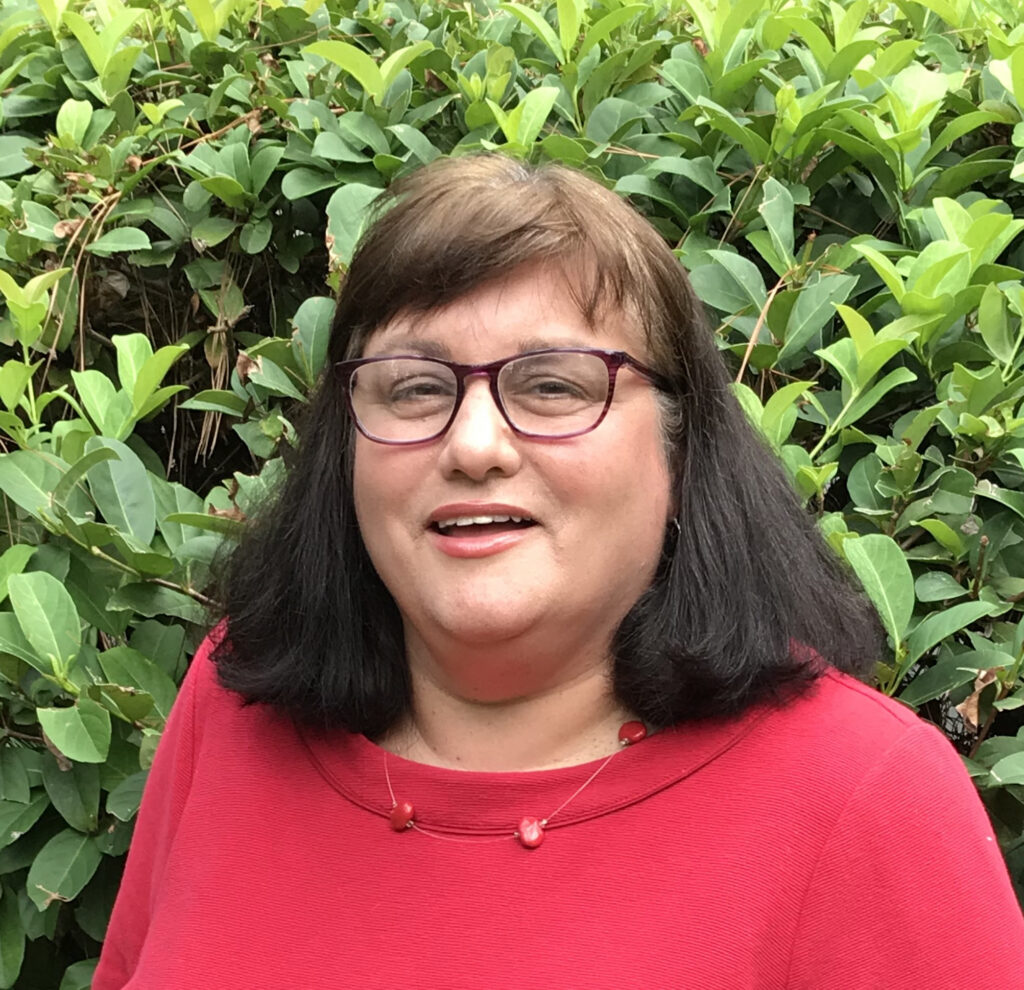
The Rev. Dr. Lisa Schrott is a 2026 Guthrie Scholar. She is the Pastor/Head of Staff of the Presbyterian Church of Okemos, MI. Lisa earned her Master of Divinity at Columbia Theological Seminary in Decatur, GA, with Honors in Practical Theology. Lisa is a second-career minister, having been an Associate Professor of Pharmacology, Toxicology, and Neuroscience at Louisiana State University (LSU) Health Sciences Center in Shreveport, LA. It was there that she felt a call to ministry.
Contact information: pastorlisa@okemospres.org;

